
C.2 What Do We Mean by “Chinese”?
- VIcky Vo
- Dec 30, 2025
- 3 min read

A Guide to Language vs. Dialects
When people say they’re “learning Chinese,” what they usually mean is Mandarin. But here’s the catch: “Chinese” isn’t just one neat language only. It’s a family of languages—some as different from each other as Spanish is from French.
So, before we dive into Mandarin’s history and the fascinating script it uses, let’s clear up a common confusion: what is “Chinese,” really?
Chinese, or Chinese Languages?
Think of “Chinese” as a tree. The trunk represents the shared script—Chinese characters—and the branches represent the spoken varieties. Mandarin is one big branch, but alongside it you’ll find Cantonese, Hokkien, Shanghainese, Hakka, and many more.
Here’s the twist: these “dialects” aren’t just accents of Mandarin. Many are so different that speakers of one can’t understand the other at all. A Cantonese speaker from Hong Kong and a Mandarin speaker from Beijing can write to each other using characters, but if they try to talk? It might feel like two completely different languages.
That’s why linguists often argue it’s more accurate to call them “Sinitic languages,” not just dialects. But socially, the word fāngyán (方言, “regional speech”) is often used to soften that divide.
Mandarin: The “Official" Standard
Mandarin (普通话, Pǔtōnghuà, literally “the common language”) became the national standard in the 20th century. Its foundation is based on the Beijing dialect, chosen to unify communication across such a linguistically diverse country.
In Taiwan, Mandarin is the official language as well, though it arrived in its current form after 1949. Here, people also speak Taiwanese Hokkien (台語 Tâi-gí), part of the Southern Min family, which has roots tracing back to Fujian province in China.
So if you walk through Kaohsiung or Tainan, you might hear shopkeepers chatting in Hokkien, switch to Mandarin for younger customers, and maybe even sprinkle in some English phrases when tourists pass by. That’s the real-life multilingual fabric of Taiwan.

Cantonese & Hokkien: The Famous “Other Chineses”
Cantonese (廣東話 Gwóngdūng wá) is spoken in Guangdong, Hong Kong, and overseas communities. If you’ve watched Hong Kong movies or karaoke’d to Cantopop, you’ve heard it. Cantonese preserves more tones (six to nine, depending who you ask) and a distinct set of slang and expressions.
Hokkien (福建話 Hok-kiàn-ōe), sometimes called Minnan or Taiwanese, is widely spoken in Taiwan and parts of Southeast Asia. Its sound is completely different from Mandarin, but its rhythm and emotional expression often strike learners as very musical.
Both languages share the same written characters, but the spoken sounds can be worlds apart.
A Thousand Years in Ink: The Chinese Script
Here’s where things get beautiful: while spoken forms differ, Chinese characters are the common thread that ties them together. Characters first emerged over 3,000 years ago as oracle bone inscriptions. Over centuries, they evolved into the square-shaped logograms we know today.
Each character represents not just a sound, but also a meaning, and sometimes even a story. For example, the character for “tree” (木) looks like a trunk with branches, while “forest” (林) is simply two trees side by side. Add a third (森), and you’ve got “dense forest.” Elegant, isn’t it?
Even when languages diverged, the script kept them loosely united. That’s why a Cantonese speaker and a Mandarin speaker can both read a menu, even if they pronounce every dish differently.
Taiwan’s Living Language Mix
Taiwan is a perfect case study in how all this comes together. Mandarin dominates schools and official life, but Hokkien remains strong in homes, temples, and local culture. In the south, Hokkien sometimes flows more naturally than Mandarin. Add in Hakka communities, Indigenous Austronesian languages, and the rising presence of English, and you’ve got a linguistic kaleidoscope.
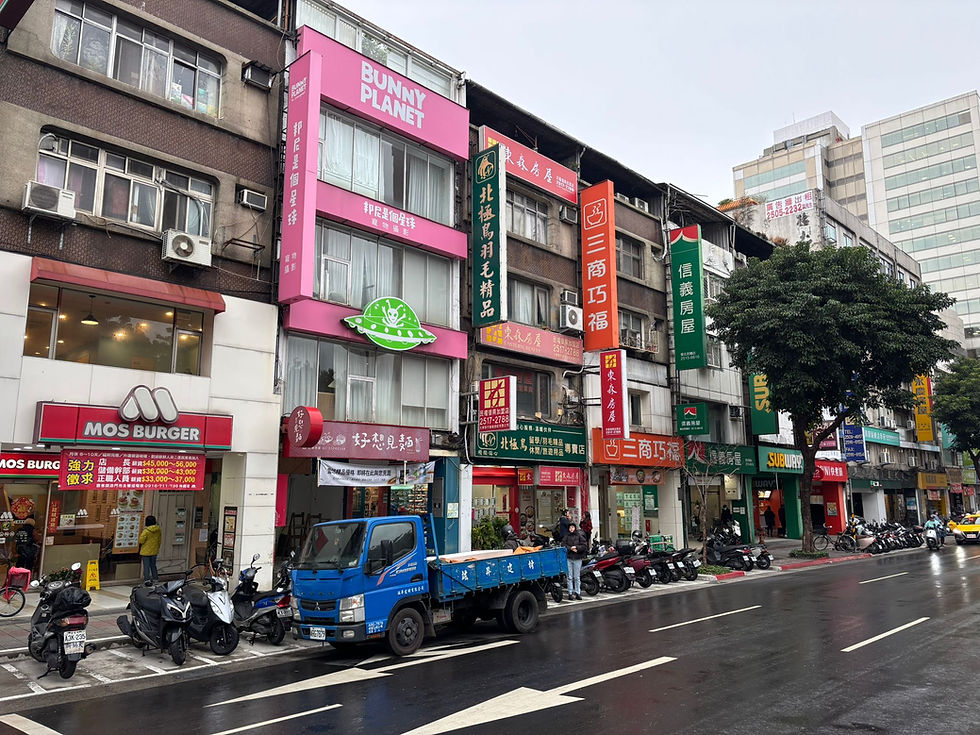
It’s not unusual in Taiwan to see a temple plaque written in classical Chinese, hear a prayer chanted in Hokkien, and then read a government sign in Mandarin—all within ten minutes. Language here isn’t static; it’s a living archive of history, migration, and identity.
So, What Do We Mean by “Chinese”?
When someone says they’re learning “Chinese,” they usually mean Mandarin, since it’s the standard taught worldwide. But it’s important to remember: “Chinese” is not a single language. It’s a family, a script, and a cultural thread that weaves together multiple voices, sounds, and identities.
And in Taiwan, you can hear this complexity every day: Mandarin as the official voice, Taiwanese Hokkien as the soulful heartbeat, and written characters as the bridge that still holds them all together.
Key Takeaways
Learning Mandarin connects you with over a billion people across the Chinese-speaking world.
It’s more than just one language — it’s an entry point into a diverse family of Chinese languages, each with its own rhythm, memory, and cultural depth.
Studying Mandarin means engaging with living history, where every word carries traces of thousands of years of evolution and connection.
Comments